8 parks to visit this summer if you've never seen the Milky Way
These eight uncrowded parks offer legitimate dark skies even in August, when the Milky Way rises before midnight
The Milky Way doesn't care about your vacation schedule. Most August nights are moonlit, washing out the stars you drove across the country to see. But these eight parks offer legitimate dark skies even during the peak of summer, when the galactic core rises early enough to photograph before midnight and the monsoon season clears the desert air.
You won't find the household names here. Yosemite and Yellowstone get their own light pollution from campground floods and parking lots. The parks below draw fewer visitors, sit farther from cities, and orient their best viewpoints toward the darkest quadrants of sky.
Great Sand Dunes National Park & Preserve
750 feet of sand against the Sangre de Cristos / Almost nobody here
The tallest dunes in North America don't look real until you're standing at the base, craning your neck at a wall of sand that blocks out the mountains behind it. But the reason to visit in August is the sky: Great Sand Dunes holds an International Dark Sky Park designation, and the dune field itself is one of the best foreground subjects in the park system. The Milky Way arcs directly over Star Dune from late evening through dawn, and you can shoot from anywhere on the sand without trailhead permits or designated viewpoints.
The dunes glow silver under starlight, and footprints from the day erase into rippled patterns by midnight.
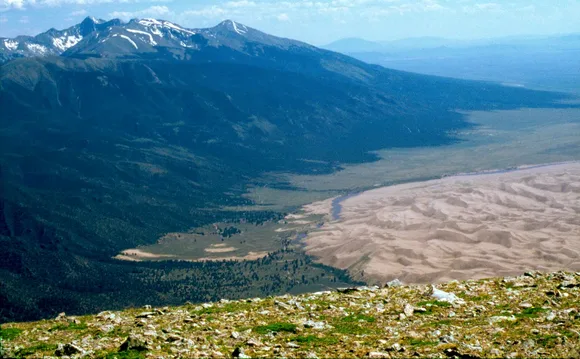
Medano Creek dries up by August, so you won't have the June crowds or the shallow water feature. That's the trade: fewer people, hotter sand, and skies so dark you'll see the Andromeda galaxy with naked eyes. Most stargazers park at the main dune parking area and walk 15 minutes out to escape car headlights. The ranger-led astronomy programs run Friday and Saturday nights through Labor Day weekend, with telescopes pointed at Saturn and deep-sky objects most tourists never think to look for.
Big Bend National Park
Larger than Rhode Island / Five-hour drive from the nearest stoplight
Big Bend earns its reputation as the darkest park in the Lower 48 not through elevation but through sheer isolation. The nearest town with more than 2,000 people is a three-hour drive, and light pollution maps show the park as a black void surrounded by hundreds of miles of near-darkness. August is monsoon season here, which sounds like a liability until you realize that afternoon storms clear the air and leave crystalline skies by 9 PM.
The Chisos Basin amphitheater funnels your view south toward Mexico, where the only lights are stars reflected in the Rio Grande.
The park holds stargazing events at the Chisos Basin amphitheater most Saturday nights in August, but you don't need a program to find darkness. Drive Maverick Road after sunset and pull off anywhere past the Santa Elena Canyon junction. You'll have 360-degree horizons and the kind of silence that makes you hear your own heartbeat. The Window Trail is a popular sunset hike, but stay an extra hour and you'll watch the Milky Way rise through the V-shaped notch in the mountains.
Great Basin National Park
Wheeler Peak at 13,000 feet / Fewer visitors than a busy grocery store
Great Basin draws fewer people in a year than Zion sees in a week, which makes it one of the least crowded places to stargaze in the entire park system. The park sits in the middle of Nevada's Great Basin Desert, surrounded by mountain ranges that block light from Ely and Delta, and the elevation keeps you above the inversion layer that traps haze in the valleys. Wheeler Peak Scenic Drive climbs to nearly 10,000 feet, putting you closer to the stars than most commercial airliners.
The bristlecone pine grove at 10,000 feet frames the Milky Way with trees older than the pyramids.
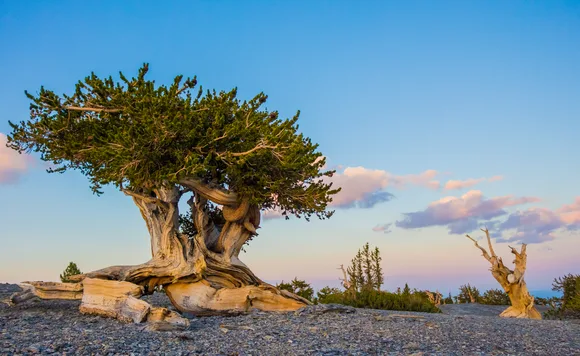
August nights drop into the 40s at the upper campgrounds, so bring layers even though daytime temperatures hit the high 70s. The astronomy programs run Thursday through Saturday nights at the Lehman Caves Visitor Center, but serious astrophotographers drive to Mather Overlook or the bristlecone grove for compositions that mix ancient trees with the galactic core. The park claims some of the darkest measured skies in the United States, with visibility exceeding 7,000 stars on moonless nights.
Black Canyon of the Gunnison National Park
2,000-foot walls that trap the sun / Sky so dark you'll see Jupiter's moons
The canyon itself is the reason to visit during the day, but the South Rim transforms into a natural observatory after sunset. The park holds Dark Sky status, and the rim sits at 8,000 feet with unobstructed views north toward the San Juan Mountains. August is peak season here, but most visitors leave by dinnertime, which means you'll have the overlooks to yourself by 9 PM.
The canyon drops into blackness below you while the Milky Way bridges the gap between the North and South Rims.
Gunnison Point and Chasm View both face north, giving you clean sightlines toward Polaris and the northern galactic arm. The park runs telescope programs at the South Rim Campground amphitheater on Saturday nights through August, with rangers pointing out the Summer Triangle and walking you through how to find the Andromeda galaxy. Bring binoculars if you have them; the Pleiades cluster rises after midnight and looks like a fistful of diamonds through even basic optics.
Death Valley National Park
Larger than Connecticut / Summer temps that chase everyone away
Death Valley in August sounds like a death wish, but the stargazing argument is simple: almost nobody visits, which means you'll have the darkest skies in California to yourself. Daytime highs push 120F in the valley floor, but elevation changes everything. Dante's View sits at 5,500 feet and drops to the 90s after sunset, with panoramic views across Badwater Basin and the Panamint Range.
The Milky Way rises over Badwater Basin like a river of light above the lowest point in North America.
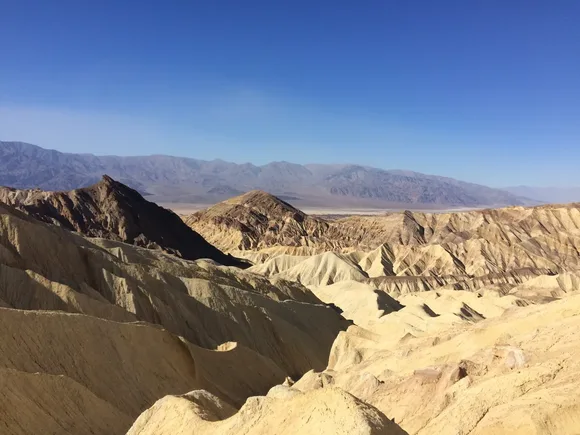
Mesquite Flat Sand Dunes and Zabriskie Point both offer foreground interest for astrophotography, and you can drive between them in 20 minutes. The dunes glow under starlight, and Zabriskie's badlands create layered ridges that lead your eye toward the horizon. August monsoons occasionally push moisture in from Arizona, which means you might catch lightning over the Funeral Mountains while the Milky Way arcs overhead. Park at Zabriskie and walk 100 yards from your car; that's all it takes to escape headlights.
Capitol Reef National Park
100-mile wrinkle in the earth / Orchards that still grow beneath Capitol Dome
Capitol Reef sits between Bryce and Arches on the Utah road trip circuit, which means most visitors treat it as a drive-through stop. Stay after dark and you'll understand why the park earned Dark Sky status in 2015. The Waterpocket Fold runs north-south, creating natural barriers that block light from Torrey and Hanksville, and the Fruita Historic District offers open fields with 360-degree horizons.
The Milky Way rises behind Capitol Dome like the spine of some buried giant.
Panorama Point and Sunset Point both face west, giving you clean views toward the Henrys and the last light draining from the sky. August nights stay warm here, often holding in the 60s until midnight, which means you can stargaze without the layers you'd need at higher elevation parks. The Scenic Drive dead-ends at Capitol Gorge, where canyon walls frame a narrow slice of sky; arrive at twilight and watch stars appear one by one as the canyon darkens.
Bryce Canyon National Park
Hoodoos that glow orange at dusk / Crowds that vanish after dinner
Bryce Canyon sees more than two million visitors a year, but almost none of them stay for the stars. The park holds one of the oldest astronomy programs in the system, running telescope viewings and constellation tours every night through August. Elevation works in your favor here: the rim sits above 8,000 feet, which puts you above most atmospheric interference and gives you the kind of transparency that turns Jupiter into a visible disk.
The hoodoos turn into black spires against the Milky Way, like a forest of stone reaching toward the galactic core.
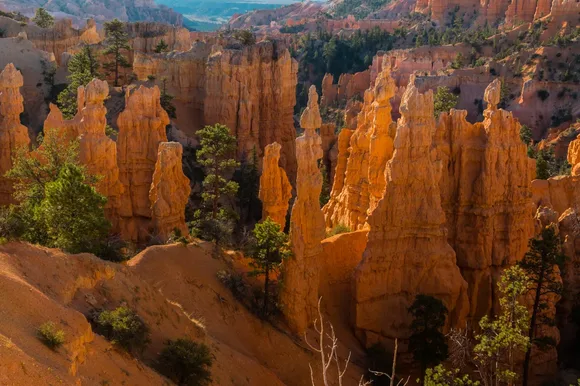
Inspiration Point and Bryce Point both face east, giving you unobstructed views toward the rising Milky Way. August is peak monsoon season, which means afternoon storms followed by crystalline skies. The astronomy rangers set up at the visitor center amphitheater most nights, with telescopes pointed at Saturn, the Ring Nebula, and the Hercules Cluster. Arrive early and claim a spot on the rim before the program starts; watching the last light drain from Bryce Amphitheater while the Milky Way appears overhead is worth the parking shuffle.
Canyonlands National Park
Four districts carved by the Colorado / Backcountry spanning canyons larger than Los Angeles
Canyonlands spreads across more territory than some eastern states, which means you can find darkness even during peak season. Island in the Sky draws most visitors, but the Needles District offers equally dark skies with a fraction of the crowds. Grand View Point sits at the southern tip of Island in the Sky, with 100-mile sightlines and nothing but canyon between you and the horizon.
The Colorado River reflects starlight from 1,000 feet below, a silver thread winding through darkness.
August nights stay warm in Canyonlands, often holding above 70F until midnight. The park runs limited astronomy programs at the Island in the Sky Visitor Center, but you don't need a ranger to find darkness. Drive to Buck Canyon Overlook or Shafer Trail Viewpoint after sunset; both face away from Moab's light dome and give you clean views south toward the Needles. The Milky Way arcs directly overhead from late evening through dawn, visible from any pullout along the rim.