8 national parks with the best sunrise views
Eight national parks where sunrise delivers something you can't get at noon, ranked by geology, elevation, and accessibility
Sunrise at a national park isn't just about the light. It's about standing somewhere few people reach at an hour most people sleep through, watching the world rebuild itself from scratch. The parks on this list earned their ranking through a combination of elevation advantage, year-round accessibility, and geological features that turn morning light into theater.
These aren't necessarily the most famous parks. They're the ones where sunrise delivers something you can't get at noon: alpine glow on volcanic craters, first light hitting a mile-deep canyon, or the Atlantic Ocean appearing out of the dark at the edge of a continent.
Acadia National Park
Summit sunrise before most of America wakes / Trails packed by mid-morning
Cadillac Mountain claims the first sunrise in the United States from October through March, and the park built infrastructure to accommodate the pilgrimage. You'll drive a winding summit road in the dark, park in a lot that fills an hour before dawn, and stand on granite slabs with a few hundred other people watching the sky turn pink over Frenchman Bay. The marketing writes itself, and Acadia leans into it. This is the most accessible sunrise experience on the list, and that's both a strength and a warning.
You don't earn solitude on Cadillac Mountain, but you do earn the Atlantic stretching to infinity under the first light of the continent.
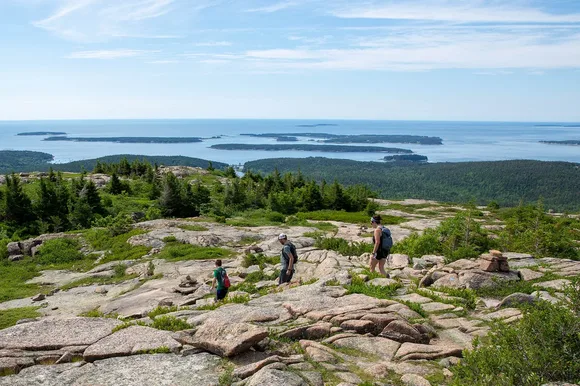
The Jordan Pond Shore Trail and the Bubbles offer quieter alternatives if you're willing to hike instead of drive. Both deliver mountain-and-water compositions that improve with low-angle light, and both stay relatively empty until breakfast time. August brings peak crowds to a park that already runs hot; consider May or September if you want the sunrise experience without the shoulder-to-shoulder wait for parking.
Haleakalā National Park
Above the clouds at 10,000 feet / Volcanic crater glows red before the sun clears the horizon
Haleakalā delivers the most otherworldly sunrise on this list. You'll drive through five climate zones in 38 miles, starting in sugarcane fields and ending above the cloud layer where the air is thin enough to make you light-headed. The crater spans seven miles, and sunrise paints it in layers: red cinder cones first, then the western rim, then the Science City observatory complex catching fire on the summit behind you. Temperatures at dawn hover in the 30s even in summer, so the rental car trunk full of beach towels won't help you here.
Haleakalā sunrise feels less like watching the sun rise and more like watching the planet rotate into daylight from a perch that shouldn't exist.
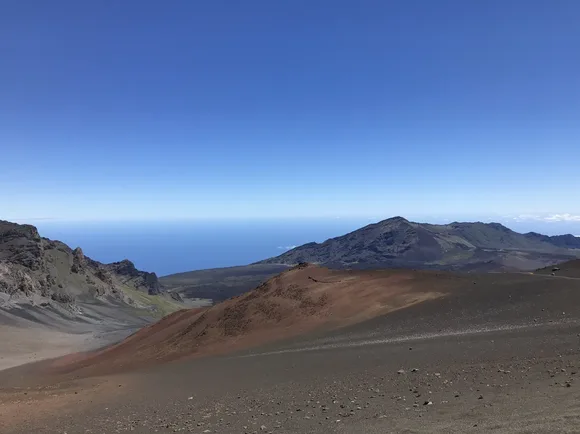
The park caps daily sunrise visitors at 250 vehicles through a reservation system that mirrors Acadia's. Unlike Acadia, this park sees far fewer visitors overall, which means you'll find relative quiet once the sunrise crowd disperses. The Sliding Sands Trail drops 2,500 feet into the crater through a landscape that looks more like Mars than Hawaii. Most people never make it past the visitor center; you should.
Badlands National Park
Lunar spires turn pink before your coffee cools / You can have a sunrise viewpoint to yourself in July
The Badlands deliver reliable color because the geology cooperates. White ash layers from ancient volcanic eruptions, red paleosol bands from extinct river systems, and yellow sandstone from a time when this was an inland sea: the whole package stacks vertically, and sunrise lights it from the side. The Big Badlands Wall runs for 60 miles along the park's northern boundary, and you can pull off at any overlook along the Loop Road to watch the show. Most people cluster at Panorama Point, but the less-photographed pullouts to the east deliver the same light without the tripod forest.
Sunrise in the Badlands feels like watching a black-and-white landscape develop into full color in real time.
August brings heat that makes midday hiking miserable, but dawn temperatures stay tolerable. The Door Trail requires almost no effort to reach a boardwalk that puts you directly among the formations, and the early light eliminates the harsh shadows that flatten the landscape by noon. Bighorn sheep often graze near the trail at dawn, uninterested in the humans clicking cameras from the boardwalk.
Grand Canyon National Park
Mile-deep canyon catches light in layers / South Rim stays accessible year-round
The Grand Canyon sunrise plays out vertically. Light hits the rim first, then the upper cliffs, then the middle terraces, then finally the river corridor a mile below. The sequence takes 20 minutes, and the color shifts from pink to orange to yellow as the sun climbs. Mather Point and Yavapai Point anchor the busiest sunrise clusters on the South Rim, but the Rim Trail connects viewpoints every few hundred yards, and you can walk east until the crowds thin. October brings cooler temperatures and thinner crowds than the summer peak, though sunrise times get later as fall progresses.
Grand Canyon sunrise doesn't reveal the canyon so much as build it piece by piece, layer after layer emerging from shadow.
The South Kaibab Trail descends from the rim through switchbacks that face east, which means you can hike down through the sunrise instead of watching from a railing. Most people turn around at Ooh Aah Point after a mile, but Cedar Ridge at 1.5 miles puts you on a peninsula with 270-degree views. The park absorbs its crowds through sheer scale; you won't feel packed in the way you will at Bryce or Arches.
Bryce Canyon National Park
Densest concentration of hoodoos on Earth / Amphitheater glows orange before breakfast
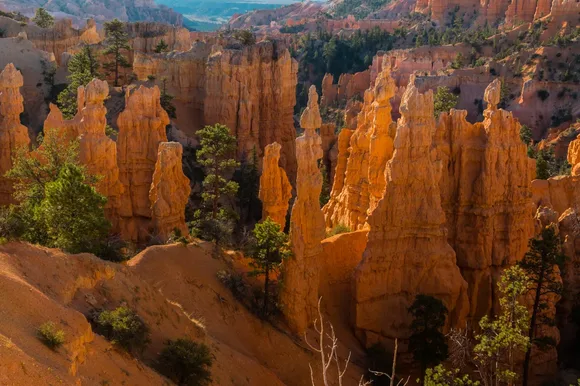
Bryce Canyon concentrates its sunrise show into a single amphitheater where thousands of hoodoos catch light simultaneously. Sunrise Point and Inspiration Point flank the main bowl, and both fill with photographers by 6 AM. The orange and white limestone bands polarize under low-angle light, and the hoodoos cast shadows long enough to emphasize their height. This is a rim park where you look down into the formations rather than up at them, which changes the entire dynamic of how sunrise works.
Bryce Canyon at sunrise looks like someone turned up the saturation slider past the point of realism, except it's real.
The Navajo Loop Trail drops into the hoodoo forest, and if you time it right, you can hike down through Wall Street as the first light reaches the canyon floor. The trail stays shaded until mid-morning, which means you'll watch the rim glow from below while you're still in shadow. August brings afternoon thunderstorms that usually clear by dawn, but check the forecast; the rim sits above 8,000 feet and weather moves fast.
Arches National Park
More than 2,000 stone arches / Red sandstone glows under dawn light
Arches requires effort to reach the sunrise payoff. Delicate Arch sits 1.5 miles from the trailhead via a route that gains 500 feet over slickrock with no shade and no guardrails. You'll hike it in the dark, following headlamps up the trail like a slow-motion conga line of photographers. The arch faces east, which means sunrise light hits it directly, turning the stone from dull red to incandescent orange. The viewing area accommodates maybe 50 people comfortably, and on summer mornings you'll share it with twice that many.
Delicate Arch at sunrise is worth the predawn wake-up and the awkward crowd negotiations, but just barely.
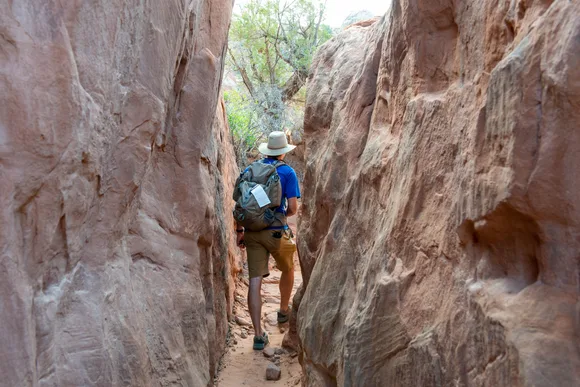
The Windows Section offers a less strenuous alternative with arches you can walk to in minutes, though none carry the iconic weight of Delicate. Turret Arch frames the La Sal Mountains through its opening, and North Window catches good light if you're standing inside looking out. August temperatures make midday hiking dangerous; sunrise is the comfortable window before the desert heats up.
Shenandoah National Park
500 miles of trails through Blue Ridge forest / Skyline Drive accesses sunrise overlooks by car
Shenandoah spreads its sunrise opportunities across 105 miles of ridgeline road, and you can watch from dozens of overlooks without leaving your car. The Appalachians run north-south here, which means the sunrise happens perpendicular to the ridges rather than along them. You'll watch valleys fill with light while the western ridges stay shadowed. Hawksbill Mountain, the park's highest point, requires a short hike but delivers 360-degree views that include the Shenandoah Valley to the west and the Piedmont plateau to the east.
Shenandoah sunrise works through subtlety: mist in the valleys, gradual light on forested ridges, no dramatic geological punctuation.
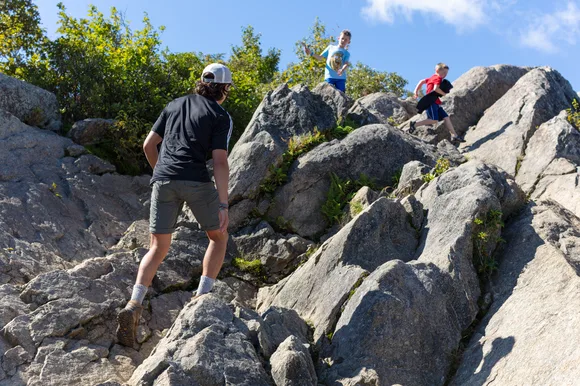
Old Rag Mountain offers the most dramatic sunrise hike in the park, though the rock scramble section requires daylight and most people save it for later in the day. Dark Hollow Falls Trail drops through forest that stays cool even in August, and you can time a post-sunrise hike to reach the falls as the light filters through the canopy. The park sits close enough to Washington, D.C., that weekends bring crowds, but dawn stays relatively quiet.
Olympic National Park
73 miles of Pacific coastline / Three ecosystems in one park
Olympic offers two distinct sunrise experiences: coastal and alpine. The coast is easier. Rialto Beach and Ruby Beach both face west, which means you won't get direct sunrise, but the sea stacks and driftwood catch reflected light that paints the scene in soft pink and orange. The Pacific stays moody here, fog common even in summer, and sunrise through fog creates a completely different light quality than the hard clarity of a desert park.
Olympic sunrise on the coast trades drama for atmosphere: muted colors, soft edges, fog revealing then concealing the offshore rocks.
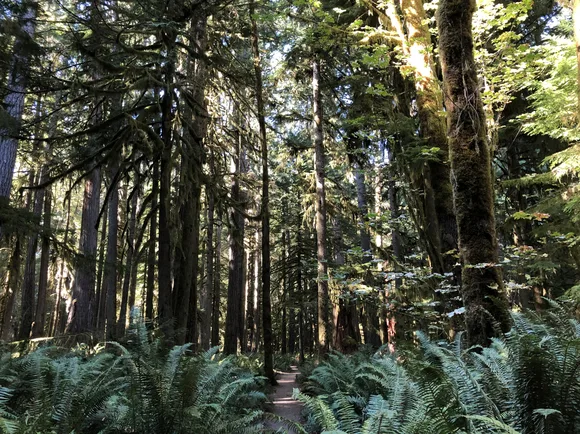
Hurricane Ridge, the park's alpine zone, sits 90 minutes from the coast and a mile higher in elevation. The ridge road opens at dawn in summer, and you can drive to the visitor center for unobstructed views east across the Strait of Juan de Fuca to the Cascades. Mount Olympus catches alpenglow behind you to the south. August brings the most reliable weather, though morning fog can close in without warning. The Hoh Rain Forest stays too dense for meaningful sunrise light, but the trailhead parking lot fills by 9 AM anyway; start there after breakfast.