8 Family Parks This Summer That Won't Be Packed
Eight national parks where families can hike, explore, and breathe without fighting crowds in June
June is the pivot month when school lets out and every family with a minivan aims for the same five parks. You know the ones: Yellowstone's parking lots fill by 8 AM, Zion's shuttle buses run standing-room-only, and the Grand Canyon's South Rim looks like a theme park. But the National Park System includes 63 major parks, and most of them have room to breathe even when summer officially arrives.
These eight parks offer everything families want in June — accessible trails, ranger programs, wildlife, and landscapes that hold kids' attention — without the shoulder-to-shoulder boardwalks. Some sit in regions most people overlook. Others absorb crowds through sheer size. A few simply haven't made it onto the average vacation planner's radar. All of them give you space to actually enjoy the trip.
Cuyahoga Valley National Park
Ohio's only national park / 25 miles from Cleveland
Cuyahoga Valley runs along the Cuyahoga River between Cleveland and Akron, following the historic Ohio & Erie Canal towpath for 20 flat, paved miles. Families bike the towpath in sections, stopping at Brandywine Falls — a 65-foot cascade that you reach via a half-mile boardwalk loop — or at one of the canal lock ruins that tell the story of 19th-century commerce. The Ledges Trail winds through moss-covered sandstone formations that look like slot canyons in miniature, with handrails and stone steps that make the route manageable for kids who can handle uneven terrain.
The park that shouldn't exist — a national park carved from suburbs and farmland — turns out to be exactly what families need: trails without cliffs, waterfalls without crowds, and a bike path you can leave and rejoin at will.
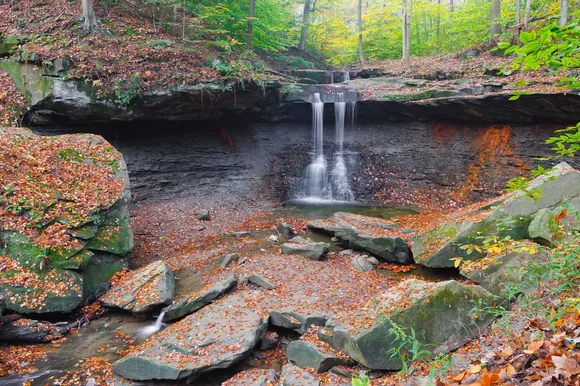
June brings green tunnels of forest canopy and mild temperatures in the high 70s, perfect for the easy loops around Crescent Lake and Goose Pond. The Cuyahoga Valley Scenic Railroad runs through the park year-round, and you can bike one direction and ride the train back — a move that turns a 20-mile slog into a 10-mile adventure. Ranger programs run most weekends, focused on canal history, bird watching, and the beaver population that's slowly reshaping the wetlands.
Denali National Park & Preserve
North America's tallest peak / One road, six million acres
Denali stretches larger than New Hampshire, but only one road penetrates the wilderness — and only the first 15 miles are paved. The park's size and remoteness keep the crowds thin even in peak season. You'll ride the park buses deep into the backcountry, stopping for grizzlies crossing the road, Dall sheep on the ridges, and caribou that treat the bus like a minor obstacle. The mountain itself — 20,310 feet of granite and ice — stays hidden behind clouds 70 percent of summer days, which means when it appears, every bus stops and every camera comes out.
Denali doesn't reveal itself on command, and that's part of the bargain: you trade certainty for wilderness that hasn't been tamed for tourism.
June brings 20 hours of daylight, wildflowers across the tundra, and temperatures in the low 60s — jacket weather that keeps bugs down and energy up. The Savage River Loop offers an easy mile-and-a-half walk through open tundra where you can see for miles, perfect for kids who need to burn off bus-ride energy. Mount Healy Overlook Trail climbs 1,700 feet in 2.5 miles for families with older kids, delivering views that stretch to the Alaska Range. Rangers lead daily walks and evening programs at the visitor center, focused on the park's geology, its glacial history, and the fact that grizzlies here outnumber the visitors who come to see them.
Great Sand Dunes National Park & Preserve
North America's tallest dunes / Backed by 14,000-foot peaks
The tallest dunes in North America don't look real until you're standing at the base, craning your neck at a wall of sand that rises higher than a 60-story building against the Sangre de Cristo Mountains. Most visitors stick to the first ridge — a 20-minute slog through ankle-deep sand — but if you push past High Dune toward Star Dune, you'll find solitude that feels almost impossible for a national park. Kids treat the dunes like the world's largest playground: running downhill at full speed, rolling, sandboarding, and discovering that hiking up takes ten times longer than sliding down.
You don't hike Great Sand Dunes so much as surrender to them — every step forward slides you half a step back.
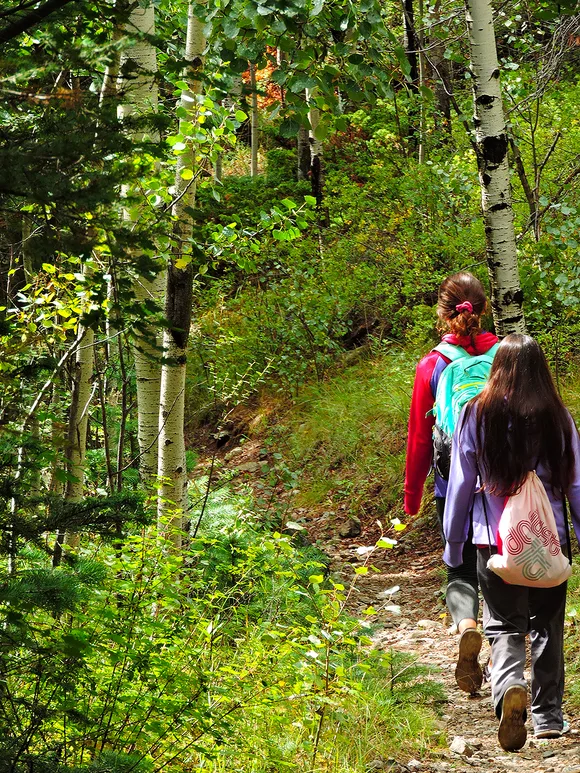
Medano Creek runs along the base of the dune field from late May through June, creating a surreal shallow beach in the middle of Colorado. Kids sprint through the surge flow — wavelets that pulse every 20 seconds — while adults sit in camp chairs watching the Sangres turn pink at sunset. By July the creek dries up, but the dunes stay, and the crowds thin to almost nothing. Rangers lead sand sledding programs and night sky sessions, taking advantage of the park's Gold Tier Dark Sky designation. Behind the dunes, trails climb into alpine forest and tundra, offering an ecosystem shift that takes you from desert to mountaintop in a single afternoon.
Lassen Volcanic National Park
California's least-crowded Sierra park / Active geothermal features
Lassen Peak last erupted between 1914 and 1917, and the evidence is everywhere: Bumpass Hell boils and steams with mudpots and fumaroles that reek of sulfur, Devastated Area shows where a 1915 lahar swept the forest away, and Cinder Cone rises as a near-perfect volcanic symmetry you can climb in 45 minutes of steep switchbacks. The Bumpass Hell Trail — three miles round-trip on boardwalks that keep you above the boiling ground — gives kids a visceral geology lesson that no textbook can match. You'll smell the sulfur before you see the vents, and the boardwalk puts you close enough to feel the heat rising from cracks in the earth.
Lassen shows you what Yellowstone looked like before the crowds arrived: thermal features you can walk right up to, alpine lakes without a permit queue, and peaks you can summit without an alpine start.
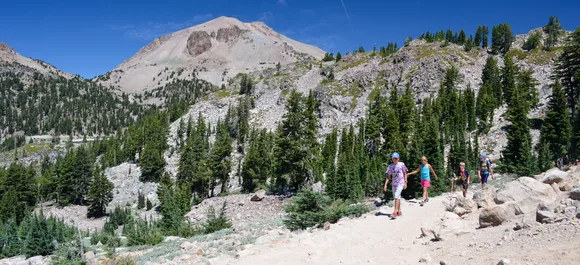
The park road doesn't fully open until late June most years, when snowplows finally clear the 8,500-foot pass near the summit. Once it opens, you'll find mild days in the low 60s, wildflower meadows, and Manzanita Lake reflecting Lassen Peak on calm mornings. The easy loop around Manzanita Lake gives families a 1.6-mile walk through forest and marsh, perfect for spotting ducks, ospreys, and the occasional black bear. Rangers lead programs on volcanic geology, the park's recovery from the 1915 eruptions, and the hydrothermal activity that continues reshaping the landscape.
Olympic National Park
Three ecosystems in one park / June is peak season for a reason
Olympic combines temperate rainforest, wild Pacific coast, and glacier-carved mountains in a park the size of Rhode Island. June hits the sweet spot before peak crowds arrive: the Hoh Rain Forest glows green under filtered light, the coast stays cool in the low 60s, and Hurricane Ridge opens after months of snow closure. The Marymere Falls Trail — an easy two-mile round-trip through old-growth forest to a 90-foot cascade — gives families a taste of the rainforest without committing to the longer Hoh River Trail. Ruby Beach and Rialto Beach offer tide pools, driftwood sculptures the size of shipping containers, and sea stacks that rise from the surf like broken teeth.
Olympic is the park that proves you don't need to choose between mountains, forest, and ocean — you just need a park big enough to hold all three.
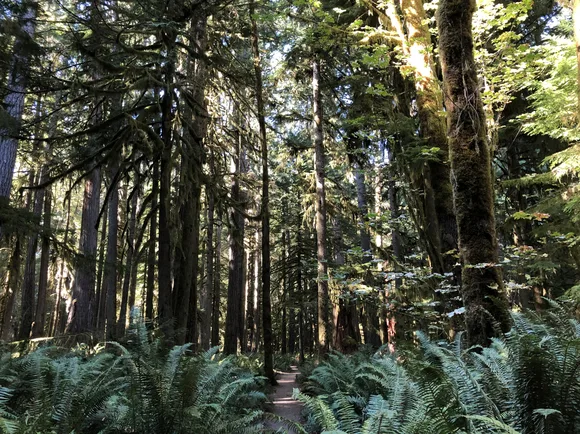
The park's size and multiple entry points spread visitors thin. While the Hoh Rain Forest sees steady traffic, Sol Duc Falls and the Ozette Triangle stay quiet even in summer. Hurricane Ridge offers paved trails and a visitor center at 5,200 feet, where kids can spot marmots and black-tailed deer while adults scan for mountain goats on the peaks. Rangers lead tide pool walks on the coast, forest ecology hikes in the rainforest, and evening programs on the elk herds that migrate through the valleys.
Redwood National and State Parks
The world's tallest trees / Eight hours north of San Francisco
The coast redwoods here include the tallest trees on Earth — over 370 feet, taller than the Statue of Liberty — but you can't drive to them, and the park doesn't advertise their exact locations. What you can do is walk among thousand-year-old groves on level trails that wind through fern understories and nurse logs sprouting new trees. Lady Bird Johnson Grove offers a 1.4-mile loop through old-growth forest so dense that noon feels like dusk. Fern Canyon — a slot canyon with 50-foot walls covered in five-finger ferns — appears in Jurassic Park for good reason: it looks prehistoric, and the easy one-mile loop through the canyon puts you in a landscape that hasn't changed much since dinosaurs walked through similar forests.
The redwoods make you recalibrate scale — what you thought was a large tree turns out to be a sapling, and what you thought was a cliff is actually a trunk.
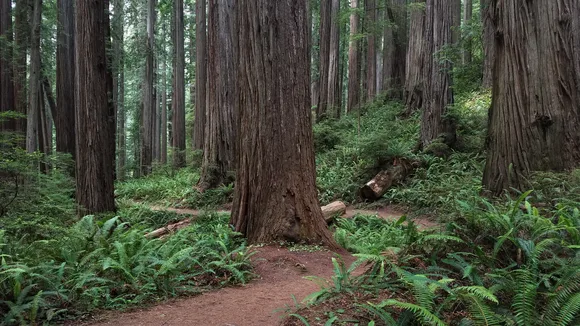
June brings morning fog that burns off by afternoon, keeping temperatures in the low 70s and giving the forest its signature mood. Newton B. Drury Scenic Parkway runs 10 miles through old-growth groves, with pullouts every half-mile for short walks among trees that were seedlings when the Roman Empire fell. Elk Prairie supports a herd of Roosevelt elk that graze in open meadows, often within 50 feet of the parking area. Rangers lead walks through the groves, explaining the redwoods' fire resistance, their shallow root systems, and the fact that 95 percent of old-growth redwood forest has been logged — making these remaining groves irreplaceable.
Sequoia & Kings Canyon National Parks
The world's largest trees / Yosemite's quieter neighbor
General Sherman — the largest tree on Earth by volume — stands in Giant Forest, a grove where trunks exceed 30 feet in diameter and bark grows thick enough to survive wildfire after wildfire. The paved path to General Sherman takes a half-mile through sequoias that make you question whether you're seeing properly: trees this large shouldn't exist outside of fantasy novels, yet here they stand, some over 2,000 years old. Moro Rock climbs 400 stairs to a granite dome summit with views across the Great Western Divide, manageable for kids who can handle heights and steep steps.
Sequoia delivers the trees that Yosemite promises but can't quite match — and it does so with a fraction of the visitors crowding the trails.
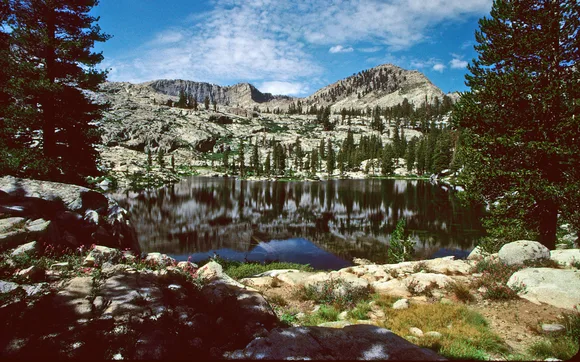
June brings snowmelt that swells the creeks and fills Mist Falls with enough water to justify its name. The hike to Mist Falls — five miles round-trip with moderate elevation gain — follows the Kings River through forest and granite slabs, ending at a cascade that soaks the observation area in spray. Big Trees Trail loops through Giant Forest on a paved path accessible to wheelchairs and strollers, offering sequoia immersion without the climb. Rangers lead programs on sequoia ecology, fire management, and the black bears that treat the campgrounds as supplemental dining halls if you're not careful with food storage.
Yellowstone National Park
Larger than Delaware and Rhode Island combined / Crowds spread thin across 1,200 miles of trails
Yellowstone draws more visitors than any park except the Great Smoky Mountains, but the park's size absorbs the crowds. Yes, Old Faithful's boardwalks fill up at eruption time, and Grand Prismatic Spring sees steady traffic. But drive to Lamar Valley at dawn and you'll spot wolves, grizzlies, and bison herds with maybe a dozen other cars on the pullouts. Hike a mile past Fairy Falls and the crowds vanish. Push into the backcountry and you'll find a wilderness as remote as any park in the system.
Yellowstone's supervolcano makes it the most geologically active park in the Lower 48, and watching Old Faithful erupt on schedule never gets old — especially when you realize it's done this every 90 minutes for longer than humans have kept records.
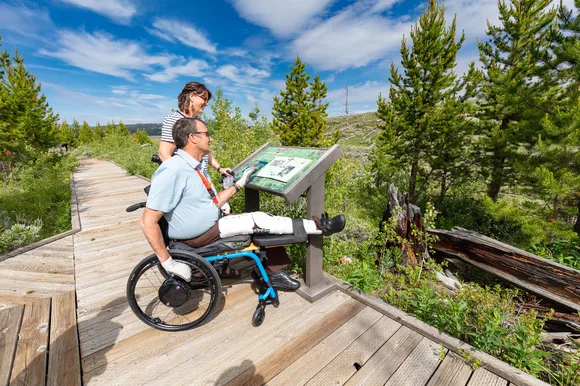
June brings wildflowers, newborn bison calves, and highs in the low 70s — perfect weather for the easy boardwalk loops around the Upper Geyser Basin and the overlook trail to Grand Prismatic Spring. The Grand Canyon of the Yellowstone delivers two waterfalls and rim trails that rival anything at the actual Grand Canyon, with far fewer people crowding the viewpoints. Rangers lead walks and talks throughout the day, covering everything from thermal features to wolf reintroduction. Kids can earn Junior Ranger badges at any visitor center, and the program here ranks among the best in the park system.