5 national parks where August beats July
Five national parks where August solves July's problems: better weather, open roads, and crowds that actually thin out
July is peak season at most national parks, which means one thing: you're paying peak prices to share trails with half of America. August offers a smarter play. Schools haven't started, weather holds steady, and at these five parks, the conditions actually improve once the calendar flips. Wildflowers bloom higher, wildlife moves more freely, and the shoulder-season crowds haven't figured out what you're about to learn.
These aren't the obvious choices. You won't find Yellowstone or Yosemite here, where August just extends the July madness. Instead, these parks hit their stride in the year's eighth month, when timing, terrain, and weather align in ways the brochures don't advertise.
Rocky Mountain National Park
Alpine wildflowers peak after July 4th / Trail Ridge Road finally clears
Trail Ridge Road doesn't fully open until late June most years, which means July visitors are still dealing with snowmelt mud and lingering drifts on high-elevation trails. August is when the alpine tundra comes alive. Wildflowers carpet the meadows above treeline, and trails like Sky Pond and Emerald Lake dry out enough that you're not postholing through slush at 11,000 feet. The park still draws crowds that rival Disneyland, but at least you're hiking on actual trail instead of navigating ice fields in trail runners.
August is when Rocky Mountain earns its reputation: wildflowers blooming at 12,000 feet where nothing should survive.

Bear Lake remains a zoo, but if you start hikes before 7 AM, you'll beat the timed entry chaos and catch alpenglow on Longs Peak without fighting for a parking spot. The high country stays cool, temperatures in the high 60s, while Denver bakes below. Afternoon thunderstorms roll in like clockwork around 2 PM, so plan morning summits and save the scenic drives for later. Kids love the short Bear Lake Loop and the Junior Ranger program at the Beaver Meadows Visitor Center, where they can spot elk grazing in plain view.
Denali National Park & Preserve
Peak month when most visitors never arrive / Tundra turns crimson before Labor Day
Denali's August is what July wishes it could be. The mountain finally shows itself. North America's tallest peak hides behind clouds roughly 70 percent of summer days, but August brings clearer skies and longer stretches when Denali (the peak, not just the park) dominates the horizon from Wonder Lake. The single park road stays open, shuttle buses run full schedules, and you're experiencing Alaska's premiere park without the solstice crowds that crush Anchorage hotels in June and July.
Denali in August offers something rare: six million acres where you can still find silence.
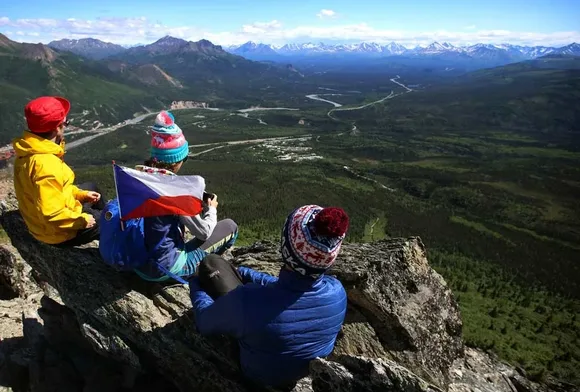
The tundra starts its color shift in late August, hillsides going burgundy and gold weeks before Vermont even thinks about fall. Grizzlies fatten up on berries in full view of the shuttle buses, and caribou herds move through Sable Pass like clockwork. Families do well here despite the logistics: the bus rides are long but naturalists narrate the whole route, and kids lose their minds when a grizzly crosses the road 30 feet from the window. Mount Healy Overlook Trail offers an accessible day hike with massive views, and the Savage River Loop works for toddlers.
Acadia National Park
Peak visitation month when locals actually show up / Ocean temps finally hit swimmable
Acadia's August is a calculated trade. Yes, it's the busiest month of the year, and yes, you'll share Cadillac Mountain's sunrise with a small village of tripod-wielding photographers. But August is also when the Gulf of Maine warms enough that you can swim at Sand Beach without hypothermia risk, when blueberries ripen along the trails, and when Maine finally feels like the coastal paradise it pretends to be in June. The park's compact size works in your favor: you can bike the carriage roads at dawn, hike the Beehive before crowds arrive, and still claim a Thunder Hole parking spot by playing the timing right.
Acadia in August is Maine at full volume: lobster boats, granite scrambles, and ocean cold enough to remind you this isn't Florida.
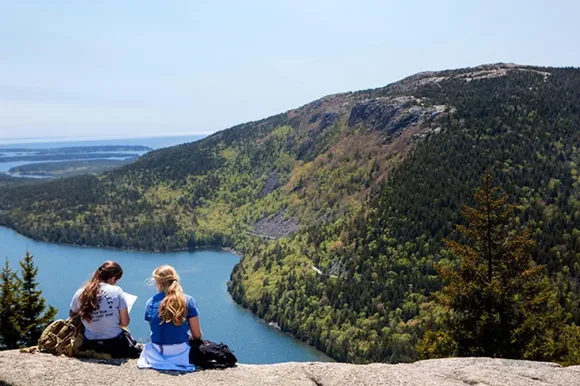
Jordan Pond Shore Trail offers an easy loop that works for families, and kids can refuel with popovers at the historic Jordan Pond House afterward. The Precipice Trail and Beehive remain thrilling iron-rung scrambles, but they're not for anyone with height issues or small children. Ocean Path delivers coastal views without the vertical drama, and the carriage roads let you bike 45 miles of car-free crushed stone through forests that smell like pine and salt air. Book lodging in Bar Harbor months ahead, or camp at Blackwoods and Seawall, where reservations open six months out and vanish within days.
Glacier National Park
Going-to-the-Sun Road fully open / Wildflowers bloom higher than July ever sees
Glacier's July is a logistical nightmare. Going-to-the-Sun Road opens in pieces, high passes still hold snow, and every trail worth hiking requires an ice axe or lowered expectations. August is when the park fully opens. Logan Pass clears out, wildflowers bloom in the alpine meadows above Hidden Lake, and trails like Grinnell Glacier and Iceberg Lake become accessible without mountaineering skills. The vehicle reservations still apply, but at least you're driving the full 50 miles of mountain road instead of turning around at a snowbank halfway up.
Glacier in August delivers what the brochures promise: turquoise lakes, wildflower meadows, and glaciers you can actually reach.
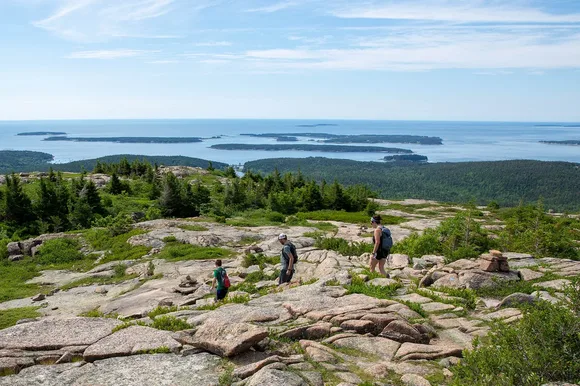
Many Glacier is the park's best-kept secret, a valley that feels like Switzerland without the exchange rate. Grinnell Glacier Trail climbs steadily to one of the park's most accessible ice fields, and families can handle the elevation gain with enough snack breaks. Hidden Lake Overlook from Logan Pass is the park's most popular short hike, a three-mile round trip that earns its crowds. The park's sheer size helps: with more trail miles than many national parks have total acreage, you can escape the Going-to-the-Sun corridor and find valleys where the only company is mountain goats.
Olympic National Park
Three ecosystems in one park / Peak month when the rain finally stops
Olympic's August is what the Pacific Northwest promises but rarely delivers: dry weather, clear mountain views, and temperate rainforest that doesn't soak you within 10 minutes. The park combines rainforest, alpine peaks, and 73 miles of wild coastline, and August is the only month when all three ecosystems cooperate. The Hoh Rain Forest stays green without the constant drizzle, Hurricane Ridge opens fully, and Ruby Beach offers tide pool exploring without gale-force winds trying to sandblast your face off.
Olympic in August is the rare moment when you can hike glacier-capped mountains and coastal sea stacks in the same afternoon without changing your rain jacket.
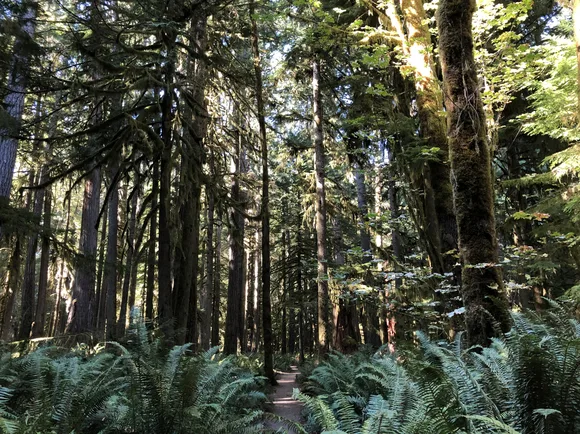
The Hoh River Trail penetrates old-growth forest where moss hangs from Sitka spruce like stage curtains, and the 17-mile trek to Blue Glacier rewards backpackers with alpine views that rival anything in the Cascades. Families stick to Marymere Falls, an easy two-mile round trip, or explore tide pools at Rialto Beach, where sea stacks and driftwood create a coastline that looks lifted from a fantasy novel. Hurricane Ridge offers accessible alpine hiking and meadows full of wildflowers, with views across to Mount Olympus when the clouds cooperate. The park's sprawl means you'll drive a lot, but the drive from rainforest to coast takes less than two hours.